
The Mentor Effect: Why representation matters for women in traditionally male-dominated environments
Sharing column published in Fearless

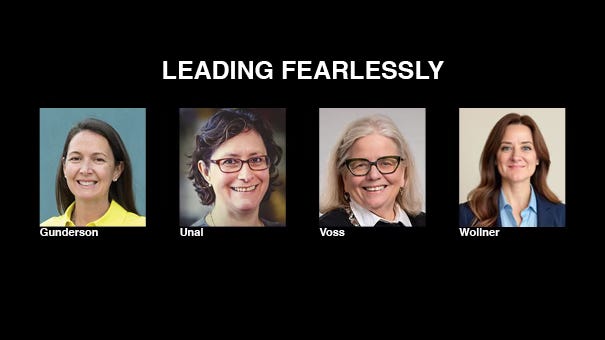
Readers: This piece was published earlier this week in the monthly Leading Fearlessly column I write for Business Record’s Fearless publication.
The Mentor Effect: Why representation matters for women in traditionally male-dominated environments
Author’s note: This article is the third in a multipart series exploring the power of mentorship in shaping modern leadership. Inspired by a recent Fearless survey in which 86% of respondents reported that a mentor directly supported their career advancement, I set out to understand why mentorship remains one of the most overlooked yet transformative forces in professional growth. What emerges reinforces that the journey to becoming an effective leader is rarely traveled alone.
As I walked from my dorm to my first day of class at Harvard Business School (HBS) in the early 1990s, I felt the familiar mix of excitement and nerves that comes with any major transition. But layered onto that excitement was a sharper awareness. Women had not been accepted into the all-male MBA program until 1963, and fewer than three decades had passed since that change. I wondered what the classroom would feel like, how visible or invisible I would be, and whether I truly belonged.
By the early 1990s, women made up about 20% of the student body. That number mattered. It created a critical mass. There were enough women to be present, to speak up and to feel less like exceptions in a still male-dominated environment. Representation did not erase bias but it reduced isolation, and that distinction made a meaningful difference, at least for me.
I was also fortunate to have role models before and after I arrived on campus. My best friend’s sister had attended HBS in the 1970s, when women were still rare. She succeeded there and went on to build a strong career. While she was not a formal mentor, her example made success feel tangible rather than theoretical. Later, after I graduated, another female alum became a mentor as I entered asset management, an industry even more male-dominated than the HBS classroom. That continuity mattered as I moved from a male-heavy academic environment into an even more male-heavy professional one.
Research reinforces what experience suggests. Representation paired with mentorship drives retention and advancement especially in traditionally male-dominated industries or environments. According to Women in Tech Mentorship Statistics 2026, 77% of women in tech who have mentors remain in the field after three years. This underscores mentorship’s role in keeping women from quietly opting out of demanding, male-dominated industries.
The effect compounds when mentors also serve as role models. The Lean In Women in the Workplace 2025 Report found that women with female mentors are significantly more likely to reach the C-suite. Seeing women in leadership expands ambition and sustains long-term career commitment by making success feel attainable rather than exceptional.
Mentorship also builds confidence, which is a prerequisite for advancement. A Forbes article, “From Networking To Confidence,” says: “Mentors can boost your self-esteem and motivate you to step out of your comfort zone through their support and encouragement. This newfound confidence can lead to personal and professional growth.” Confidence influences who speaks up, who pursues stretch opportunities, and who stays in the pipeline when challenges arise.
Progress, then, is not just about opening doors. Progress also depends on who stands visibly on the other side. Representation tells women they belong. Mentorship shows them how to stay, grow and lead. When mentors serve as allies, there is momentum. When women see themselves reflected in classrooms, boardrooms and industries once closed to them, and have support to succeed, the question shifts from whether they belong to how far they can go. That shift is where real change begins.
I asked leaders to share their experiences and insights with mentorship in male-dominated professions.
Nicole J. Gunderson, principal, ManchesterStory

Mentorship helped me navigate finance and venture capital, industries where women remain underrepresented, but sponsorship is what truly accelerated my career. Having leaders who were willing to use their credibility to advocate for me, put my name forward for opportunities and trust me with real responsibility changed the trajectory of my career. That kind of support changes outcomes; it affects who stays, who advances and who ultimately leads.
Representation matters because it normalizes ambition and reinforces a sense of belonging in environments where women can otherwise feel isolated. As the mother of two young daughters, this work is deeply personal. I’m motivated every day to help shape an industry where they, and others like them, can see women in leadership as something expected, not exceptional.
Rosa Unal, vice president and chief information and digital officer, Iowa State University Foundation
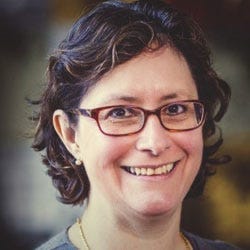
Mentorship has been a steady force throughout my career, from being one of only a few women in my undergrad computer systems engineering class to serving today as chief information and digital officer. Even after receiving a full‑ride scholarship to pursue graduate studies in the U.S.A., I remained in the minority in more than one way. Having mentors beside me helped me find confidence and believe in myself.
My mentors were not part of formal programs. They were colleagues, supervisors and friends who offered perspective, candor and encouragement at pivotal moments. Early on, a boss nudged me toward graduate studies in operations research and applied math. Later, more experienced colleagues helped me navigate new cultural, academic and professional expectations, ultimately leading me to a career in nonprofit and higher education, where I’ve spent more than 30 years leading technology and digital transformation.
Mentorship isn’t magic, it’s having someone you trust and [who] believes in you. For women, mentorship doesn’t just guide careers, it expands what feels possible. Their belief helped me trust my own abilities and shaped the leader I am today.
Susan Voss, Voss Consulting, board director, former Iowa insurance commissioner
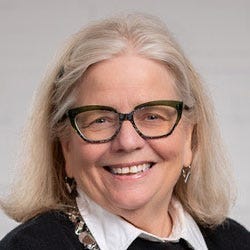
I would not have had the career in insurance I have experienced without a terrific role model who happened to be a woman. She was smart, funny, inquisitive and hard working. Yet she was not afraid to ask questions and admit she might not have all the answers. I watched her interact on some of the largest stages in our industry and she was so authentic in her demeanor and abilities. She walked in the room and it wasn’t a “woman insurance leader” it was “an insurance leader – period!” She led by example. She taught me that success was about hard work, experience and collaboration. The fact that she was a woman was secondary. But women helping women succeed continues to be absolutely critical. The glass ceiling doesn’t shatter if only one woman breaks through!
Sara Wollner, regional director at ISU Extension and Outreach
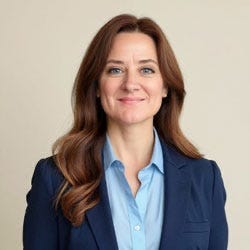
Mentorship made a big impact on my 20-plus year career in science and agriculture. Early on in my career it helped to have a mentor I could relate to, namely a mother with young children. I didn’t see a lot of leaders that were women with children. This made it difficult to imagine a path for myself at the company. I eventually found a fellow mother as a mentor and it increased my confidence to have their support and guidance. Their feedback helped me to become more self aware and improve my leadership skills. With increased confidence, I was more resilient and able to grow at that company. I worked hard and focused on making an impact, then during challenging times I would reach out to my mentors for advice. I learned to rest and reach out to my network during challenging times rather than give up or quit.
One piece of advice I got early on in my career from a mentor was to stop being so humble. Raised in the Midwest, I was taught to downplay my accomplishments. However, I quickly learned this doesn’t get you very far in the corporate world. Over time, I mastered the ability to tactfully share accomplishments and stand up for myself. I also became a mentor myself and brought others along with me on my career journey. By the time I left, I am proud to report we had a mother’s room for women pumping, a thriving women’s leadership team and several more mothers in leadership positions. Representation matters!
Reflection Questions:
When have you felt either included or isolated in a professional or academic setting, and how did representation (or the lack of it) influence your confidence or willingness to participate?
Who has served as a mentor, sponsor or visible role model in your life, and how did their presence change what you believed was possible for your own career or leadership path?
What specific action could you take today to increase representation or support for someone entering a field where they might otherwise feel they don’t belong?
Leadership Outside the Box is dedicated to exploring the next wave of leadership, fostering out-of-the-box, future-focused thinking for leaders at every level. Through columns, interviews, videos, and real-time observations, I hope to spark your insight, challenge assumptions, and support your growth in the art and science of leadership. As the founder of Story Board Advisors, and having had the privilege of working for decades as a CEO, board director, executive coach, university faculty and writer, my goal is to help you think differently, lead intentionally, and think about what is ahead, so you can truly make a difference in the world.
I invite you to read along and share your views. You can reach me at sdebaca@storyboardadvisors.com.
I’m proud to be a member of the Iowa Writers’ Collaborative. Please check out our work here. Please consider being a paid subscriber to my colleagues’ sites. Thank you for your support.
Amen. This topic is so incredibly important.